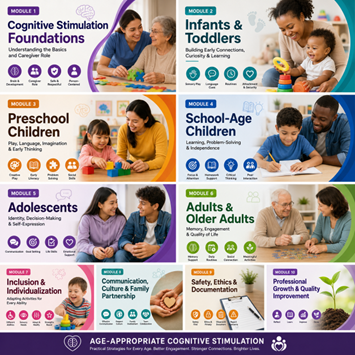
Build practical skills for inclusive childcare and respectful support for children with disabilities, developmental differences, special health care needs, sensory needs, communication differences, and diverse learning profiles. This caregiver-focused course teaches learners how to observe needs, adapt routines, support participation, communicate with families, document objectively, and work within professional boundaries.
Inclusive childcare is not a separate service reserved for a few children. It is a professional approach that helps every child belong, participate, communicate, learn, play, and stay safe. Children with disabilities or additional support needs may require changes in routines, communication, supervision, activities, environments, or care planning. Caregivers play a vital role by noticing barriers, responding respectfully, following support plans, and partnering with families and qualified professionals.
This course introduces practical inclusion principles for professional caregiving. Learners explore disability awareness, developmental differences, sensory support, communication support, positive behavior guidance, mobility and personal care considerations, safety planning, family partnership, documentation, safeguarding, and ethical practice. The course does not train learners to diagnose conditions, provide therapy, write clinical plans, or replace licensed health, education, or disability professionals.
Instead, the course prepares caregivers to observe, support, adapt, document, and report. Learners practice plain-language communication, strength-based thinking, respectful terminology, confidentiality, teamwork, and risk awareness. Every module connects inclusive practice to daily caregiving routines such as arrival, play, meals, toileting, rest, outdoor time, transitions, group activities, and parent communication.
Key Points
• Inclusion means access, participation, belonging, safety, and respect.
• Caregivers support children by adapting routines and following approved plans, not by diagnosing or treating conditions.
• Families are essential partners because they understand the child's history, strengths, communication, culture, routines, and needs.
• Documentation should be objective, timely, respectful, and limited to authorized information.
• Inclusion improves quality when caregivers use teamwork, curiosity, consistency, and professional boundaries.
Reflection: How can a caregiver make a child feel included before any formal support plan is written?