CHILD NUTRITION AND FEEDING PRACTICES
FREE
No payment required
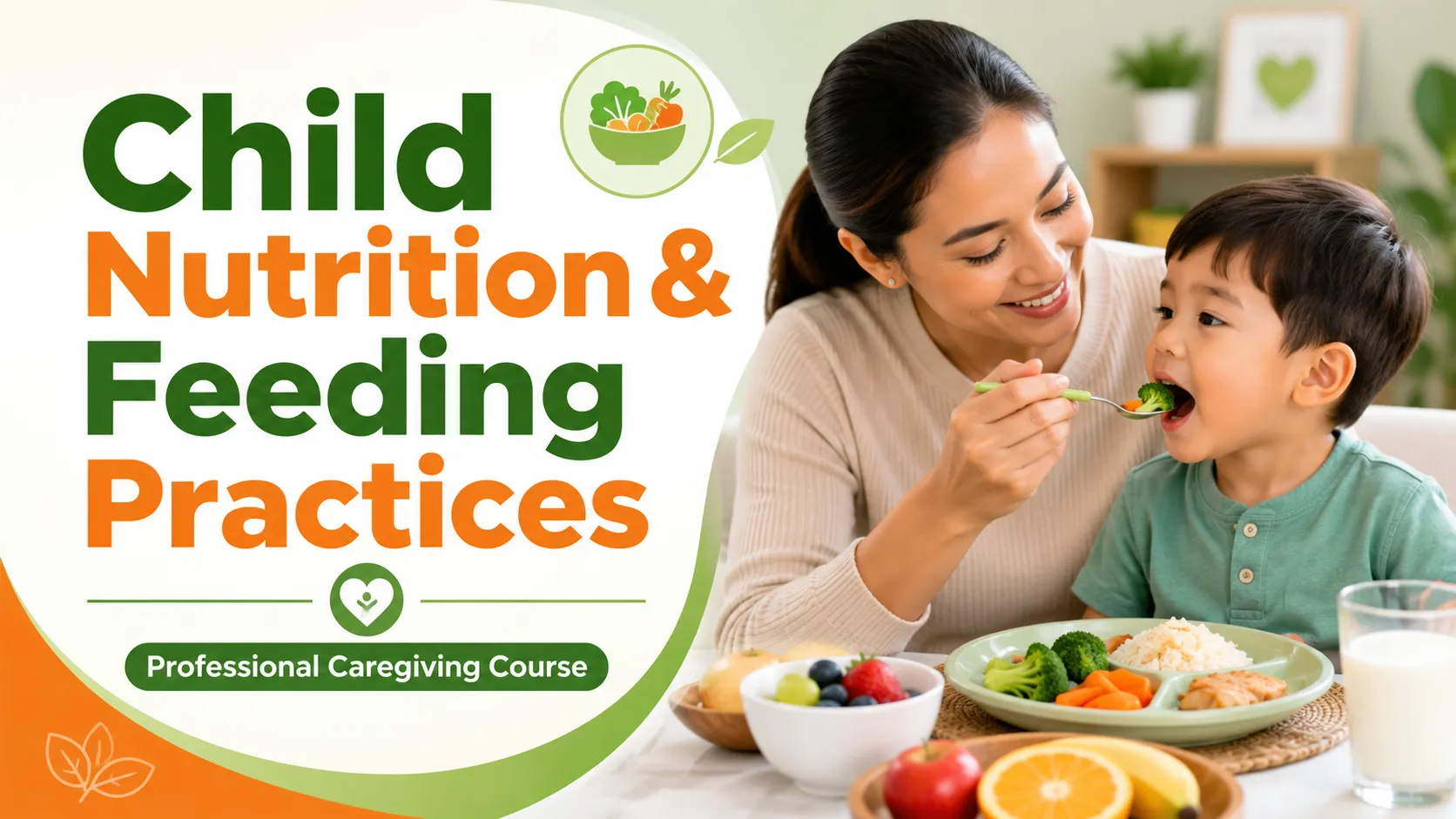
CHILD NUTRITION AND FEEDING PRACTICES
Child Nutrition and Feeding Practices is a professional caregiving course designed to help learners support safe, respectful, age-appropriate feeding for infants, toddlers, preschoolers, and school-age children. The course explains daily nutrition support in plain language and connects feeding to safety, development, culture, communication, and observation
Feeding children well requires more than knowing food groups. It requires understanding age-appropriate feeding, developmental readiness, family culture, safe preparation, active supervision, and responsive communication. Children learn food habits through repeated experiences, predictable routines, and trusted adults who support them without pressure or shame. This course gives caregivers a structured foundation for child nutrition and feeding practices. It does not train learners to prescribe diets, treat medical nutrition problems, diagnose feeding disorders, or replace pediatric clinicians and registered dietitians. Instead, it prepares caregivers to follow care plans, prepare safe feeding spaces, encourage healthy routines, notice warning signs, document objectively, and communicate concerns with families and supervisors. The course includes practical lessons, applied examples, reflection prompts, and mini activities that can be used as Udemy lectures, assignments, discussion prompts, or workplace training content. Instructors may adapt references, policies, emergency contacts, and local food guidance for their country, organization, or licensing requirements. Key Points • The course supports safe feeding assistance, not medical nutrition therapy. • Learners are encouraged to use local pediatric, public health, and childcare policies. • The tone is respectful, culturally responsive, and child-centered.
What You Will Learn In This Course
Course Modules
10 modulesModule 3
MODULE 3: TODDLER NUTRITION AND MEALTIME ROUTINES
Course Requirements
- Key Points
- Modules 1 through 4 build nutrition and feeding foundations.
- Modules 5 through 7 focus on safety, special considerations, and risk recognition.
- Modules 8 through 10 focus on communication, documentation, program practice, ethics, and professional development.