INFANT AND NEONATAL CARE FUNDAMENTALS
FREE
No payment required
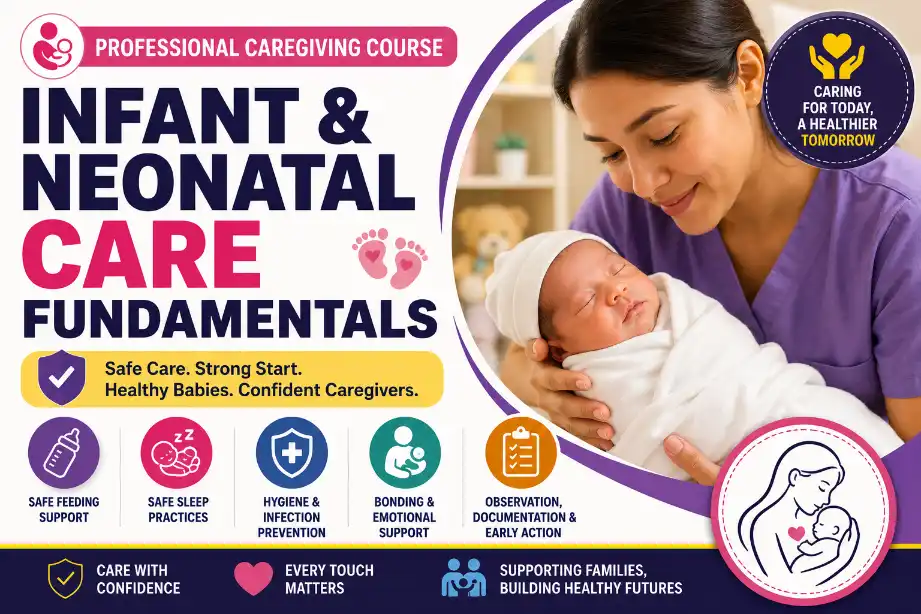
INFANT AND NEONATAL CARE FUNDAMENTALS
Build practical, caregiver-focused knowledge for supporting newborns and infants safely during the earliest stages of life. This course introduces essential infant and neonatal care concepts, including observation, feeding support, safe sleep, hygiene, infection prevention, diapering, bonding, developmental awareness, family communication, warning signs, documentation, and professional boundaries
Infant and neonatal care requires patience, observation, consistency, and strong respect for family roles and clinical boundaries. Newborns and young infants cannot explain discomfort, pain, hunger, overheating, illness, or distress in words, so caregivers must learn to observe patterns carefully and respond in ways that protect safety and dignity. In caregiving work, small actions matter: washing hands before holding a newborn, placing a baby on the back for sleep, keeping feeding supplies clean, reporting poor feeding, documenting a fever, and reassuring a worried parent can all improve care quality. This course introduces the foundations of safe infant and neonatal support in everyday caregiving environments. Learners will explore normal newborn characteristics, cues, feeding support, breastfeeding and bottle-feeding safety, safe sleep, bathing, diaper care, cord care awareness, infection prevention, transportation safety, environmental risks, developmental observation, family education, emotional support, documentation, ethics, and professional development. The course is written in plain language and organized into ten modules. Each module contains practical lessons, caregiver practice points, applied examples, reflection questions, and mini activities that can be adapted for Udemy videos, assignments, quizzes, or discussion prompts. Instructors should adapt local legal requirements, emergency procedures, health system contacts, and organization-specific policies before publishing. Key Points • The course is caregiver-focused and does not replace medical, nursing, midwifery, pediatric, or lactation training. • Caregivers should follow local laws, workplace policy, the infant’s care plan, and guidance from qualified professionals. • Learners are encouraged to observe, support, document, report, and refer rather than diagnose or manage medical problems independently. • Infant safety depends on prevention, hygiene, safe sleep, feeding awareness, timely escalation, and respectful family partnership. Reflection: How can careful observation help protect newborns and infants who cannot describe what they feel?
What You Will Learn In This Course
Course Modules
9 modulesModule 3
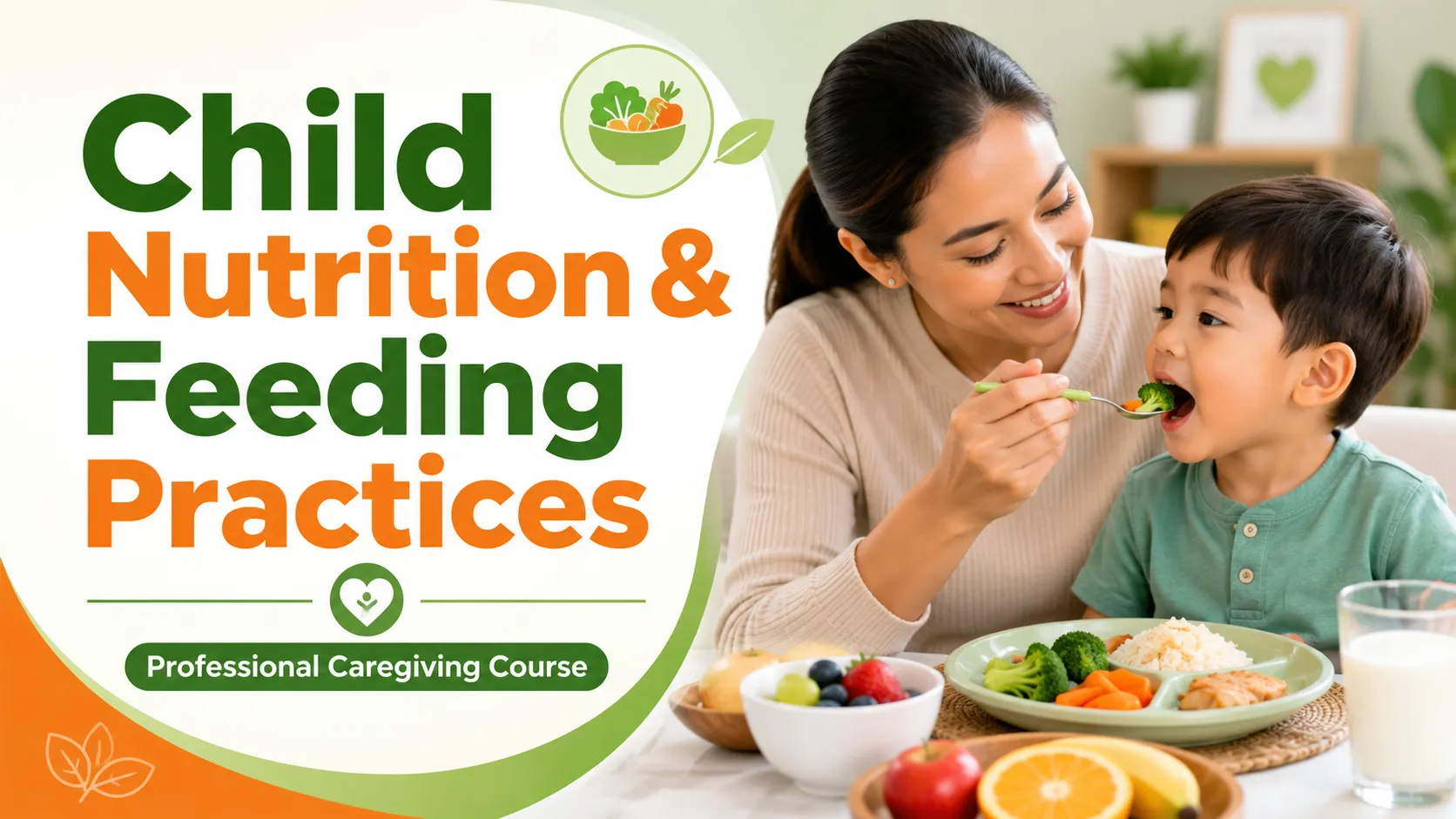
MODULE 3: FEEDING, NUTRITION, AND HYDRATION SUPPORT
Who Is This Course For?
-
This course is appropriate for new caregivers, childcare assistants, home care aides, healthcare assistants, community health workers, maternity support workers, family caregivers, babysitters seeking professional structure, and students interested in child and infant care. It is also useful for organizations that need structured content for onboarding or continuing education.
-
Learners should move through the course in order because later modules build on earlier concepts. Instructors may add local emergency contacts, national safe sleep guidance, immunization resources, reporting policies, workplace forms, demonstrations, role-plays, and scenario-based quizzes. Because infant and neonatal care practices may vary by country, setting, and clinical condition, learners should always follow current local guidance and instructions from qualified professionals.
-
Key Points
-
Use each lesson as a script foundation for short Udemy lectures.
-
Use reflection questions for assignments, discussion boards, or journal prompts.
-
Use mini activities for skill practice, role-play, observation exercises, or case discussions.
-
Update clinical references, emergency numbers, and policy instructions before publishing.
-
Avoid presenting the course as a substitute for professional pediatric, neonatal, nursing, or emergency training.