FOOD SAFETY AND HYGIENE IN NUTRITION
FREE
No payment required
FOOD SAFETY AND HYGIENE IN NUTRITION
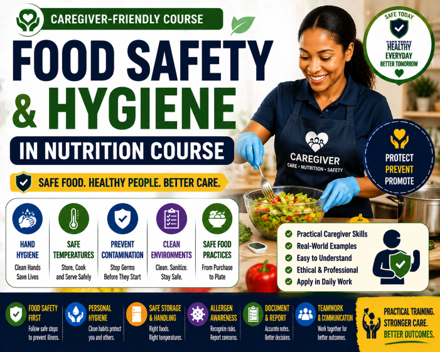
Master caregiver-focused food hygiene, safe meal handling, storage, preparation, serving, documentation, and reporting for homes and care settings.
This course teaches the food safety and hygiene routines that protect children, older adults, people with chronic illness, and other vulnerable clients. Learners study hand hygiene, personal hygiene, food purchasing, storage, cleaning, sanitizing, cross-contamination prevention, cooking and reheating safety, safe serving, allergen awareness, foodborne illness signs, emergency response, documentation, and policy follow-through. The course does not replace local food handler certification or regulatory training. It prepares caregivers to follow approved procedures, prevent contamination, report concerns, and support safe nutrition routines. Key Points • This course uses plain language and practical caregiver examples. • Learners are reminded to follow the care plan, supervisor instructions, and local policy. • The course supports observation, safe assistance, reporting, documentation, and respectful communication. • Clinical decisions, diagnosis, diet prescription, and treatment changes remain the responsibility of qualified professionals. • Instructors may add local policies, country-specific food guidance, assessment rubrics, and discussion boards before publishing.
What You Will Learn In This Course
Course Modules
9 modulesModule 3
MODULE 3: Safe Purchasing and Receiving
Who Is This Course For?
-
This course is appropriate for new and experienced caregivers, nursing assistants, home care aides, childcare workers, community health workers, family caregivers, and students preparing for caregiving or healthcare support roles. It is also useful for agencies that need structured training content for nutrition-related caregiving.
-
Learners should move through the modules in order because later lessons build on earlier concepts. Instructors may add local examples, short quizzes, policy comparisons, case discussions, role-play activities, and practical demonstrations. Because laws, diet orders, and care settings vary, learners must follow their local organization requirements and qualified professional guidance