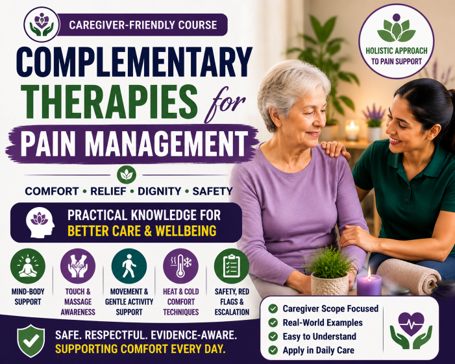
Complementary Therapies for Pain Management
$40.00
Complementary Therapies for Pain Management
A caregiver-friendly course on complementary therapies for pain management, comfort-focused support, pain communication, non-drug coping strategies, safety screening, documentation, red flags, and caregiver escalation responsibilities.
Complementary Therapies for Pain Management Course is designed for learners who want to understand pain support, complementary therapy awareness, comfort measures, communication, red flags, documentation, and caregiver boundaries in safe, practical, caregiver-friendly language. The course connects each topic to daily support work, dignity, communication, observation, documentation, and escalation. The course is suitable for Udemy because it can be used as a structured self-paced learning experience, converted into lecture scripts, adapted into slides, or used as a downloadable learner manual. It combines foundational knowledge with applied caregiver examples. Caregiver scope note: This course introduces complementary pain-support approaches for caregiver awareness. It does not train learners to diagnose pain causes, prescribe treatment, adjust medication, perform invasive therapy, provide professional manual therapy, delay urgent care, or replace licensed clinical pain management, nursing, rehabilitation, pharmacy, or medical care. This course reflects general principles from recognized complementary and integrative health safety resources. Learners should always check local requirements and seek guidance from authorized staff when unsure.
What You Will Learn In This Course
Course Modules
11 modulesModule 3
Module 3: Communicating About Pain
Who Is This Course For?
-
Caregivers, healthcare assistants, community health workers, support workers, wellness assistants, care supervisors, family caregivers, and learners interested in safe complementary health support in caregiving environments.