Operations Management
$40.00
Operations Management
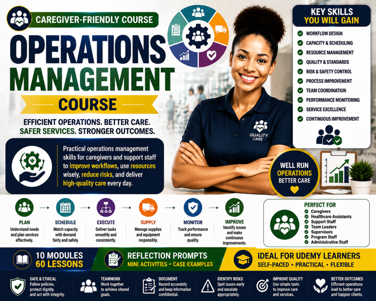
Course on daily service operations, workflow design, capacity, quality, scheduling, resources, risk control, and continuous improvement in caregiving environments
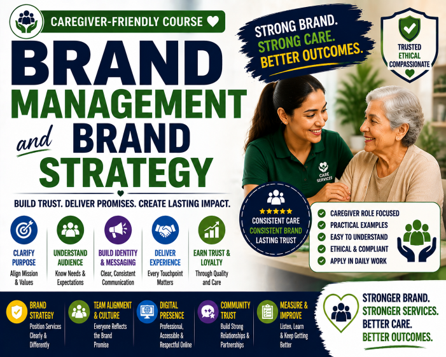
Operations Management Course is designed for learners who want to understand how daily service operations, workflow design, capacity, quality, scheduling, resources, risk control, and continuous improvement in caregiving environments support safe, organized, ethical, and respectful service delivery in caregiving and healthcare support environments. The course explains management ideas in practical language and connects each concept to daily workplace behavior. This course is suitable for Udemy because it can be used as a structured self-paced learning experience, converted into lecture scripts, adapted into slides, or used as a downloadable learner manual. The plain-language format supports learners from different educational backgrounds while connecting management concepts to realistic caregiving and healthcare support environments. Caregiver scope note: This course does not train learners to diagnose, prescribe, replace managers, make HR decisions, approve budgets, interpret law independently, or authorize organizational changes. The caregiver role is to observe, support, communicate, document, protect dignity, and escalate concerns according to policy. This course reflects general management, administration, quality, risk, ethics, communication, and service improvement principles. Learners should always follow local law, employer policy, professional regulations, payer rules, accreditation expectations, and supervisor instructions.
What You Will Learn In This Course
Course Modules
10 modulesModule 3
Module 3: Capacity and Scheduling
Who Is This Course For?
-
This course is for caregivers, care supervisors, operations support staff, healthcare assistants, administrative workers, and learners who support organized service delivery. It is also useful for learners who want to understand how management ideas influence the quality, safety, dignity, and reliability of care-related services.